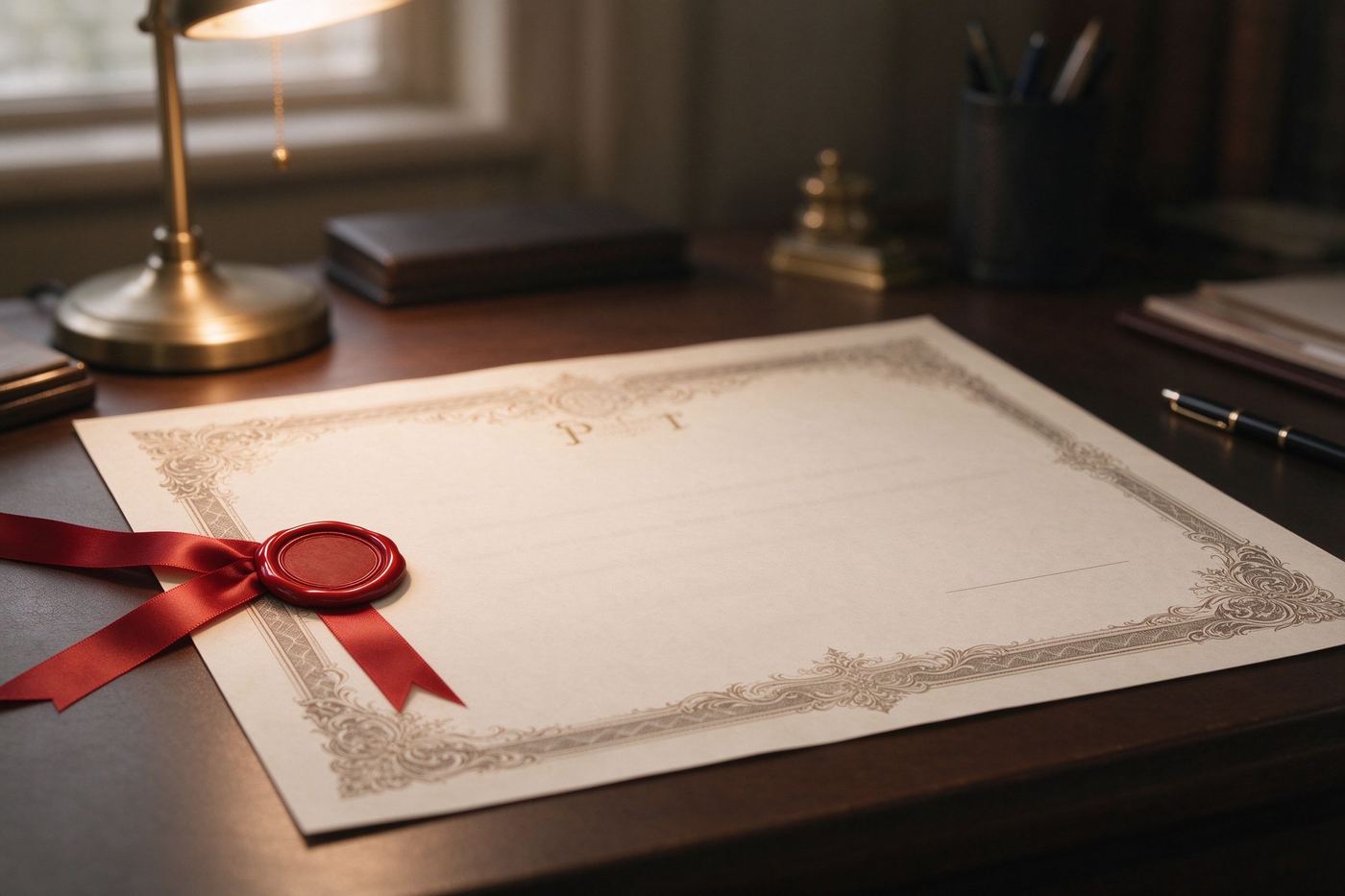
Walk into any university dorm, tech office or long-running group chat and you will find one: a printed certificate, framed at eye level, awarding someone "World's Okayest Programmer" or "Best Eyeroll During Standup". Nobody mistakes it for a real achievement. It is worth less than the paper it is printed on. And its owner will defend it like a diploma. What is going on here? Participation awards are usually mocked as the symptom of an over-medicated childhood, yet the silly certificate has become one of the most beloved objects in modern group culture. This article unpacks why.
走进任何一间大学宿舍、科技公司办公室或长期活跃的群聊,你都会发现这样一样东西:一张打印出来的证书,挂在视线平齐的位置,授予某人「全世界还不错的程序员」或「站会上最会翻白眼奖」。没人把它当真正的成就。它的价值还不如打印它的那张纸。而它的主人却会像捍卫毕业证一样捍卫它。这到底是怎么回事?参与奖通常被嘲笑为「童年被过度奖励」的症状,但沙雕证书却成了现代社群文化里最受欢迎的物件之一。本文拆解这背后的原因。
The reputation problem名誉问题
"Participation award" is an insult. The argument goes like this: real rewards should be scarce, earned publicly, and meaningful only if someone lost. Handing a ribbon to every child in the race teaches them that showing up is enough, and that losing does not matter. Generation after generation of opinion columnists has used the phrase as a shorthand for soft, entitled, inflated self-esteem. There is a real debate inside psychology about whether extrinsic rewards crowd out intrinsic motivation — children rewarded for drawing draw less when the reward stops, experiments say. So if awards are so suspect, why do adults keep making fake ones on purpose?
「参与奖」本身就是一句骂人话。论证是这样的:真正的奖励应该稀缺、公开赢得、并且只有在有人输掉时才有意义。给赛跑里每个孩子都发绶带,等于告诉他们到场就够了,输了也无所谓。一代又一代评论员把这个词当作「软弱、 entitled、自尊膨胀」的简写。心理学界确实有一场真实的争论:外部奖励会不会挤掉内在动机——实验表明,因为画画而被奖励的孩子,奖励一停就画得更少了。那么,如果奖励这么可疑,为什么成年人还在故意制造假证书?
What recognition is actually for认可到底是用来干嘛的
The scholarship on real awards and the sociology of rituals agree on one thing: a certificate is never really about the piece of paper. It is a prop for a ceremony. It exists to make a public statement — we saw you, this matters, this group remembers — and to give the recipient a physical token that keeps the statement alive after the room empties. The content printed on it barely matters; the act of naming someone in front of their peers is the reward. Real trophies fail when the ceremony is boring or the praise is generic. Fake certificates succeed precisely because the ceremony is short, public, and impossible to mistake for anything official.
关于真实奖项的学术研究与仪式社会学在一件事上达成一致:证书从来都不是那张纸本身。它是仪式的道具。它的存在是为了做一个公开宣告——我们看见你了,这很重要,这个群记得——并给受奖者一个实体信物,让这个宣告在人群散去之后继续存在。上面印了什么内容几乎不重要;在同伴面前点名某个人,才是奖励本身。真实奖杯会失败,是因为仪式无聊或表扬空洞。假证书会成功,恰恰因为仪式简短、公开、且绝不可能被误认为任何正式东西。
Why the joke version works为什么搞笑版反而有效
A silly certificate inverts every rule of serious awards on purpose, and the inversion is the whole point:
沙雕证书故意反转正经奖项的每一条规则,而这个反转本身就是笑点:
- No stakes, maximum honesty. Because nobody pretends the award matters, nobody has to pretend about the compliment either. "Best Slack reaction face" says: we notice you.
- 没有赌注,极度诚实。因为没人假装这个奖重要,也就没人需要假装恭维。「最佳 Slack 表情包反应脸奖」说的是:我们注意到你了。
- Anti-hierarchy humor. Corporate awards reinforce rank. A room full of engineers voting "most likely to microwave fish at 9 p.m." flattens rank and celebrates the group over the individual.
- 反等级幽默。公司奖项强化职级。一屋子工程师投票选出「最可能晚上九点热鱼的人」,拉平了职级,庆祝的是群体而非个人。
- Inside jokes as membership proof. A certificate nobody outside the room understands is a membership card. The confusion of newcomers is the joke's second life.
- 内部梗即会员证明。一张外人看不懂的证书就是会员卡。新人的困惑是这个笑话的第二春。
- Low cost, high permanence. A 30-cent printout can sit in a frame for ten years. Serious awards cost hundreds and vanish into drawers.
- 成本极低,持久极高。一张三毛钱的打印件能在相框里挂十年。正经奖杯花几百块,最后都消失在抽屉里。
Where silly certificates actually work沙雕证书真正管用的场景
The format appears wherever a group already gathers and wants a ritual. End-of-quarter team retros award "Best PR description" and "Loudest keyboard at 11 p.m.". Dungeons & Dragons groups hand out "Most Dramatic Death" and "Chaos Gremlin of the Campaign". Weddings give bridesmaids fake "Official Weeper" credentials. Retirement dinners invent an award named after the retiree's signature phrase. The pattern is: the group is already together, the moment already has emotion, and the certificate is just the cheap object that makes the moment souvenir-shaped. Our list of funny award ideas for offices and teams has ready-made titles for each of these scenes.
只要一群人本来就会聚在一起、并且想要一个仪式,这种格式就会出现。季度末团队复盘会颁发「最佳 PR 描述奖」和「晚上 11 点键盘最响奖」。龙与地下城团会发「最壮烈牺牲奖」和「战役混乱小妖精奖」。婚礼上给伴娘发假的「官方哭包证书」。退休晚宴发明一个以退休者口头禅命名的奖项。规律是:人本来就在一起,时刻本来就有情绪,证书只是让这一刻变成纪念品形状的便宜物件。我们的办公室与团队趣味奖项创意为每个场景准备了现成称号。
The other half of the joke is the paper itself. A certificate sent as a chat image dies in the scroll; a certificate printed on A4 paper at slightly-too-high resolution, sealed with a sticker and handed over in silence while the room applauds, becomes an object. The teams that keep doing this year after year almost always print. The physical version costs almost nothing, yet it inherits the cultural weight of every diploma and award ribbon your group has ever seen — which is exactly why parody lands so well on it. If you only need a digital version for the group chat, export the PNG and pin it; if you want the wall, export the print-ready version and let the framing wait until someone actually leaves.
笑话的另一半是那张纸本身。以聊天图片发出的证书会死在刷屏里;用 A4 纸、分辨率稍微过高地打印出来、贴一枚贴纸、在全场掌声中默默递过去的证书,会变成一件物品。年复一年坚持做这件事的团队几乎总是打印版。实体版几乎不花钱,却继承了你们这个群体见过的每一张毕业证、每一条颁奖绶带的文化重量——这正是为什么戏仿在它身上如此成功。如果你只需要群聊里的数字版,导出 PNG 并置顶即可;如果你想要一面墙,导出打印版,相框等真有人离开团队时再说。
Anatomy of a good silly award一张好沙雕证书的解剖
Bad awards feel like cheap shots. Good awards feel like love. The difference is construction. Write the title around a specific, true, harmless quirk — "Always offers to drive" beats "Most reliable", because only one person in the room will recognize themselves. Give the award a fake institutional voice: "The Official Committee for Things That Happened". Add a made-up citation clause, a fake seal, a signature block for the group chat itself. Keep the tone fond, not smug. The recipient should think "they actually noticed", not "they are making fun of me". If you want to see this done in seconds, our Certificate / Award Maker generates the whole layout with your names, titles and date, free and without watermark — then you print it, frame it, and watch it earn its wall space.
烂奖项感觉像人身攻击。好奖项感觉像爱。差别在构造。称号围绕一个具体、真实、无害的小怪癖来写——「永远主动开车奖」胜过「最靠谱奖」,因为屋里只有一个人会认出自己。给奖项一个假装的机构口吻:「大事发生官方委员会」。加上一条编造的颁奖词、一个假印章、一个以群聊本身名义的签名栏。语气保持亲切,不要得意。受奖者应该想「他们居然注意到了」,而不是「他们在取笑我」。如果你想几秒钟就看到成品,我们的趣味奖状生成器会用你填的名字、称号和日期生成整张排版,免费、无水印——然后你打印、装框,看着它赢得墙上的位置。
FAQ常见问题
Are participation awards actually good or bad?参与奖到底是好是坏?
Serious research is mixed: trophies that reward only winning push competition, while rewards for effort can crowd out intrinsic motivation. The joke version — silly, clearly ironic certificates — escapes both problems, because nobody mistakes them for real evaluation.
严肃研究结论是混合的:只奖励赢的奖杯会强化竞争,而奖励努力又可能挤出内在动机。搞笑版——明显反讽的沙雕证书——避开了这两个问题,因为没人会把它当成真正的评价。
What makes a funny award actually funny?什么样的搞笑奖才真好笑?
Specificity and affection. "Most likely to bring snacks to a D&D session" lands because it is true to one person; generic jokes about "hard workers" do not. The award should make the recipient laugh and the room nod.
具体性和爱意。「最可能给跑团带零食奖」之所以成立,是因为它精准对应某一个人;关于「努力工作者」的泛泛笑话不行。好奖项应该让获奖者笑出来,让满屋人点头。
When should we hand out silly awards?什么时候适合发沙雕奖?
At moments with a built-in ritual: end-of-quarter retros, offsites, wedding rehearsals, D&D finales, retirement dinners, group-chat anniversaries. The award is the excuse for the ceremony, not the other way around.
在自带仪式感的时刻:季度复盘、团建、婚礼彩排、跑团收官、退休宴、群周年。奖项是仪式的借口,而不是反过来。
Can funny awards offend people?搞笑奖会得罪人吗?
Yes, if the "joke" is a jab disguised as an award. Safe awards celebrate quirks inside the group; unsafe awards target insecurity, status or real mistakes. If it would sting on a bad day, rewrite it.
会——如果「玩笑」其实是伪装成奖项的攻击。安全的奖项庆祝群体内部的小怪癖;危险的奖项瞄准不安全感、地位或真实失误。如果这句话在对方状态差的日子会扎人,就重写。